

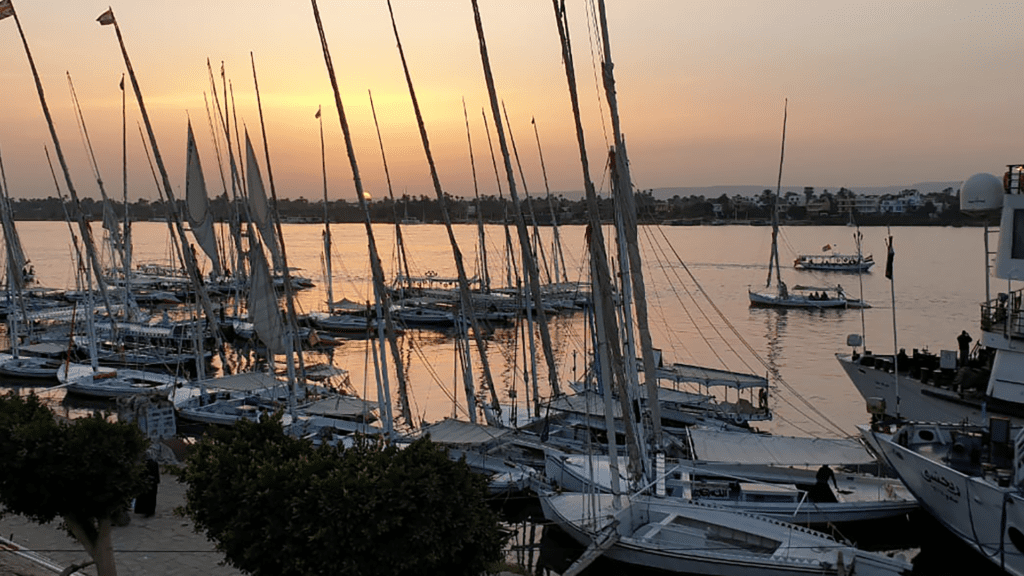
Millions of tourists visit the Nile each year, journeying up this world-famous river to learn about the archaeological and cultural sites spanning millennia.
As well as being an essential part of history, the Nile is a haven for wildlife. Creatures such as the hippopotamus, Nile crocodile, rock python, and spotted-neck otter call the world’s longest river home.
In this Nile River Cruise Guide, we highlight the unmissable sites, from hidden tombs to unique temples, to ancient structures that align with the Milky Way!
If this blog has inspired you to take a trip to Egypt, consider pursuing our luxury custom tours for inspiration, and do feel free to get in touch if you have any questions.
Visit the Karnak Temple Complex
Almost every Nile cruise begins or ends in Luxor, and Karnak is the crown jewel. This massive complex covers over 1,000 hectares—that’s the size of 1,000 football fields.
Built to honor the gods Amun, Mut, and Khonsu, Karnak is one of the most important religious sites in history.
Did you know? Karnak acted as an ancient observatory. The temple is perfectly aligned with the Milky Way. If you visit at night, look up between the columns to see the stars exactly as the Pharaohs did.
Travel Tip: Most big tour groups visit in the morning. We can arrange a [Private Luxor Tour] for you in the late afternoon when the light is golden and the crowds are gone.
Located in Luxor, on the east bank of the river Nile, Karnak was built from around 2055 BC to about 100 AD. The complex earned the title of UNESCO World Heritage Site thousands of years later, in 1979.
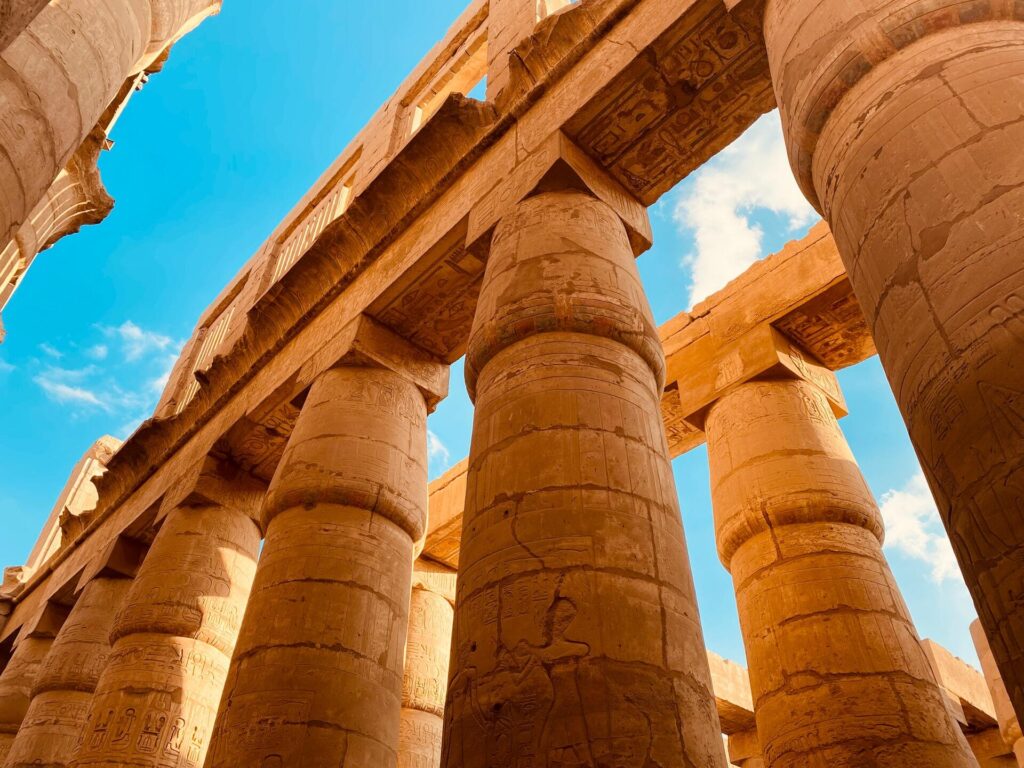
Karnak had multiple purposes, one of those being an observatory. Did you know that the temple is perfectly aligned with the Milky Way? If you visit at night, make sure to look up between the columns, and there you will be able to see one of the most magnificent wonders of space!
This temple complex is a must-visit during your river Nile cruise. It’s recommended to visit this historic site in the early morning or late afternoon; this is when it’s most beautiful.
Explore the Temple of Kom Ombo (The Double Temple)
Located between Luxor and Aswan, this is a highlight of sailing the Nile. Built during the Ptolemaic dynasty (180-47 BCE), Kom Ombo is unique because it is a “Double Temple.”
It is dedicated to two gods simultaneously:
Horus: The falcon-headed god of the sky.
Sobek: The crocodile god, associated with the Nile’s power and fertility.
This temple is unique, as it’s dedicated to two Gods: Sobek and Horus. The two spaces of worship are separate and entirely symmetrical, making it one of the most famous and fascinating temples in Egypt.
Wondering why there are two separate places of worship? Due to a conflict between Sobek and Horus, the Ancient Egyptians felt it necessary to separate them.
Sobek was the ancient god of crocodiles and is often associated with fertility and death. Therefore, the location of Kom Ombo is appropriate as vast numbers of crocodiles would gather at that spot.
The other half of the temple is dedicated to Horus, the falcon-headed god of kingship and the sky.
Important: Exploring the Valley requires walking in the heat. Make sure to wear comfortable shoes and bring water.
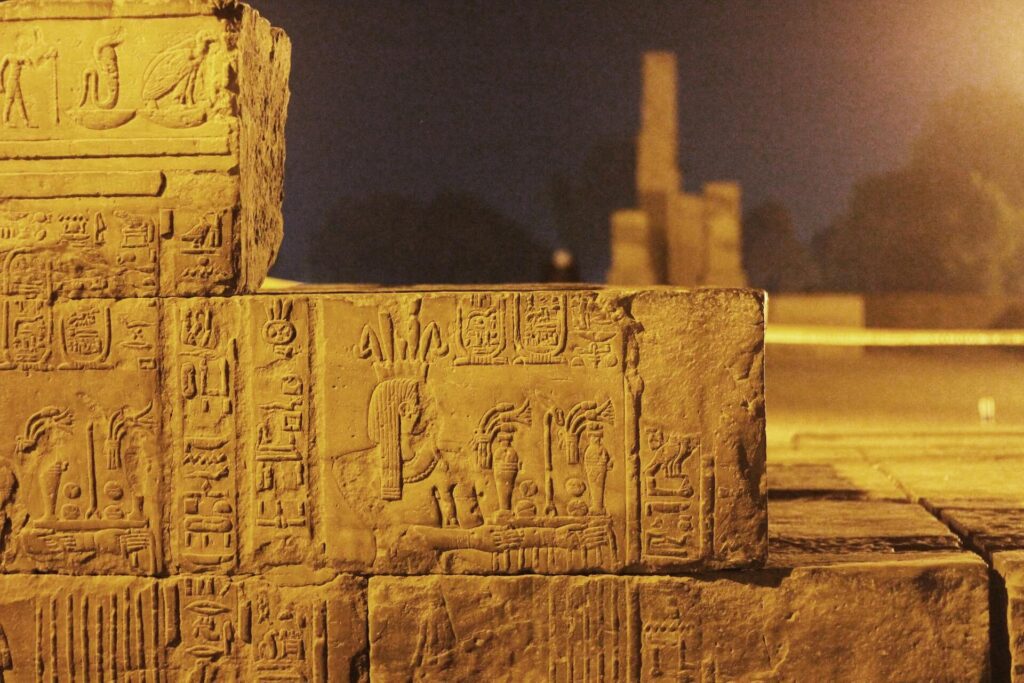
When you visit this slice of history, make sure you pay attention to the pylons. Pylons are stone structures placed by temple doors and are usually decorated with carvings. The Temple of Horus has an imposing entrance pylon covered in intricate carvings that towers over tourists at 37 meters high.
It’s recommended that you take a tour to get the most out of visiting these breathtaking structures. Get inspired by our luxury Cruise the Nile in Style tour or get in touch to plan your perfect custom Nile cruise.
Experience the Valley of the Kings
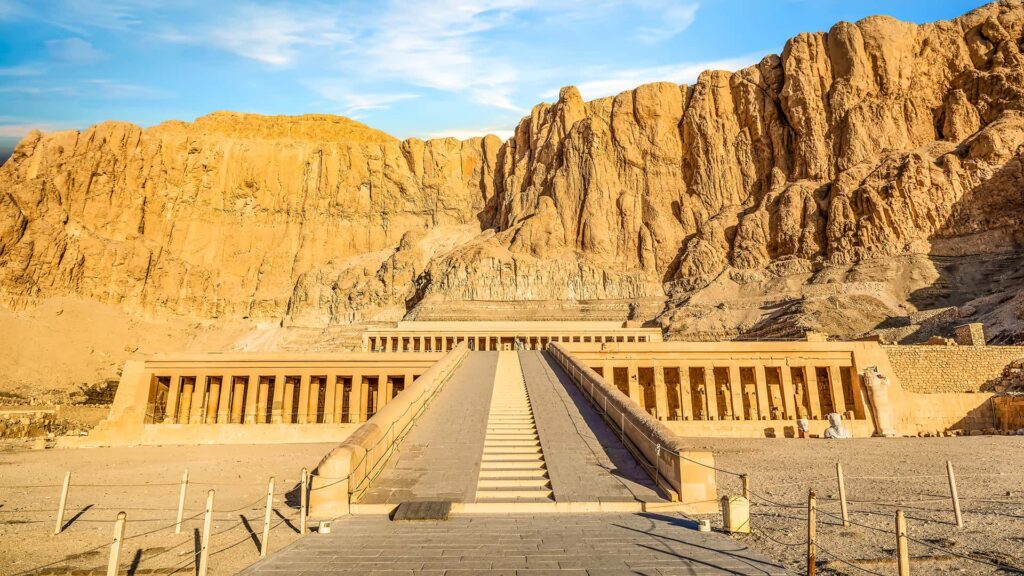
The Valley of the Kings is truly a once-in-a-lifetime experience. Here you can travel deep underground to witness the final resting places of the most important rulers in Ancient Egypt.
The Valley of the Kings, or Wādī Al-Mulūk in Arabic, is located west of the Nile in Upper Egypt and was part of the ancient city of Thebes. The tombs were built to protect the pharaoh’s bodies, safely hidden away in the vaults.
When you enter the Valley of the Kings, there’s a 3D replica of the valley to understand the incredible engineering undertaking that took place.
So far, 110 tombs have been unearthed, the most famous being the tomb of Tutankamen.
The pharaoh’s tomb was discovered in 1922, and the mummy of the young pharaoh was completely intact. Moreover, the grave’s artwork retains its original color from the Ancient Egyptian period, partly due to the valley’s warm and dry conditions.
Another famous tomb is that of Seti I; it’s the longest tomb measuring 450 feet and situated a whopping 200 feet underground. It’s important to remember to bring comfortable shoes as a trip to the Valley of the Kings requires a lot of walking!
Best Time to Go on a Nile Cruise
The best time to cruise the Nile is between October and April.
- Winter (Dec-Feb): The weather is cool and pleasant, perfect for temple walking.
- Shoulder Season (Oct/Nov & March/April): Fewer crowds and lovely warm evenings on the deck.
- Summer (May-Sept): It can be very hot, but the prices are lower and the sites are empty.
Luxury Tip: Dahabiya vs. Large Cruise Ships
While large cruise ships are popular, the true VIP way to see Egypt is on a Dahabiya. These are smaller, traditional sailing boats with only 5–10 cabins.
- No Crowds: You dock at small islands and sites that big ships can’t reach.
- Private Service: It feels like your own private yacht.
- Authenticity: Sail by the power of the wind in total silence.
Ready to Book Your Nile Adventure? So there you have it, it would be impossible to summarize all the wonders of the Nile in one short guide. But these are the essential stops you should consider while cruising the Nile in Egypt, according to the locals.
This is your sign to bask in the glory of Karnak, learn about the unique Kom Ombu temple, and travel deep underground to witness the Valley of the Kings.
The Nile has a wealth of culture and history on offer, in addition to its stunning natural beauty and diverse wildlife. Want to see more of Egypt beyond the Nile? Take a look at our custom tours of Egypt. If you have any questions, please don’t hesitate to contact us.